

In high-angle work, rope rescue, and professional climbing, a gear bag is never just a “carrier.” It is the first line of defense for your equipment and the starting point of on-site efficiency.
The XINDA B2 Gear Management Pack delivers a verifiable, manageable, and dependable carrying solution through clear version gradation, proven material selection, and intelligent organization logic.
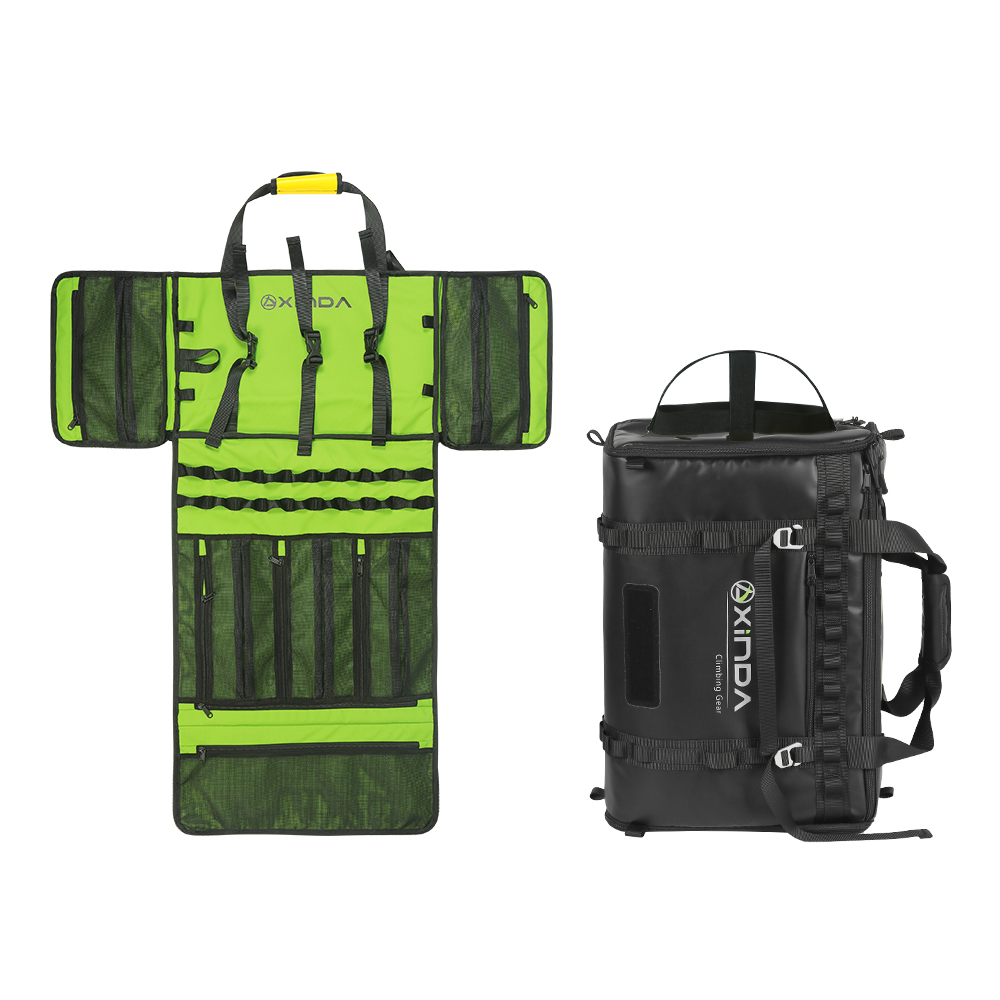
Material Comparison: PVC vs. TPU – Choose What Fits
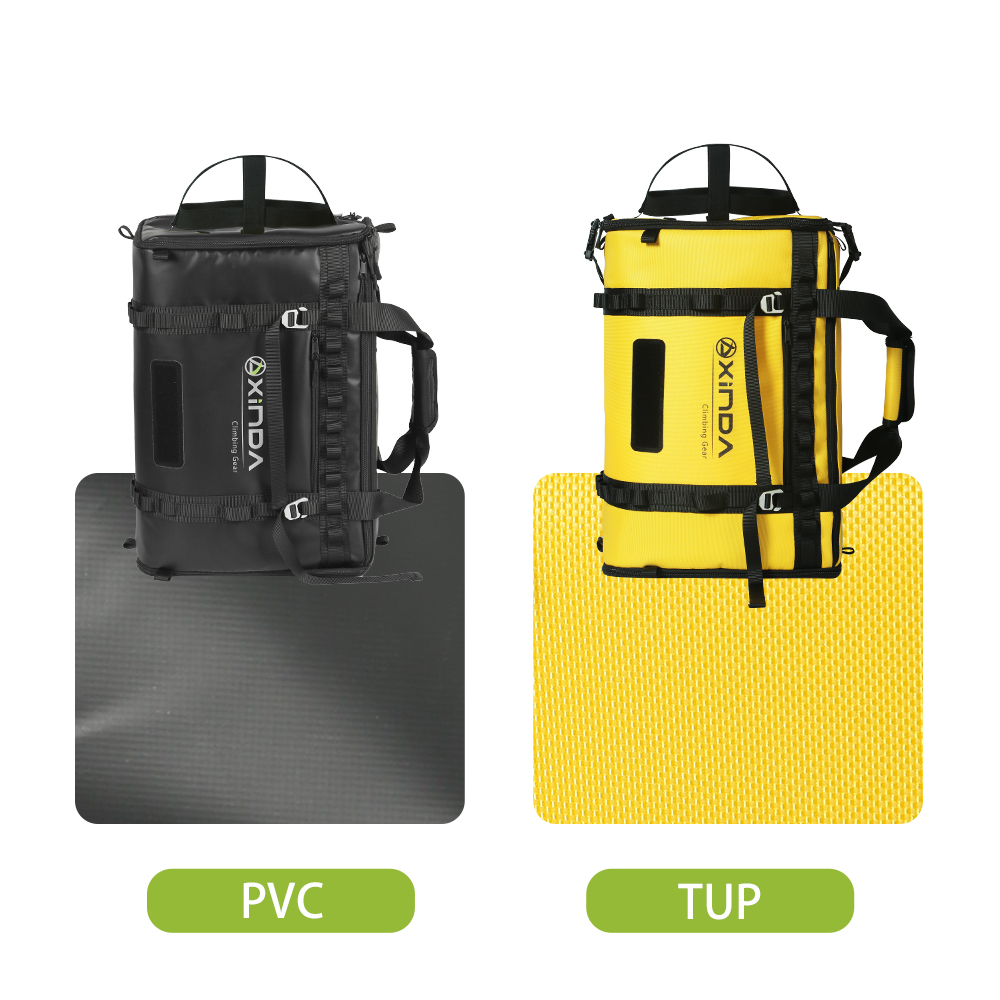
| Material | Characteristics | Best For |
|---|---|---|
| PVC Coated Fabric | Water-resistant, highly abrasion-resistant, cost-effective | General outdoor, self-drive tours, basic training |
| TPU Coated Fabric | Lighter, more flexible, cold-resistant, anti-aging, odorless | Cold environments, frequent pro use, rescue teams |
Both materials offer surface water resistance – no problem in rain, snow, or damp ground contact. The TPU upgrade remains flexible down to -20°C, making it ideal for winter operations or high-altitude climbing.
Version Comparison: Precision Matching for Different Work Intensities
| Feature | Black Pro | Yellow Pro |
|---|---|---|
| Material | PVC | TPU |
| Helmet Strap | Yes | Yes |
| Internal Adjustable Straps | 3 straps | 3 straps |
| Internal Pockets | 7 | 7 |
| Gear Loops | 2 rows | 2 rows |
| Best For | Technicians / clubs | Rescue teams / pro units / cold regions |
The 3 internal adjustable straps (Pro versions) secure ropes, slings, hydration bladders, or tool kits independently – preventing collisions and tangling during transport. For “open-and-use” pro scenarios, this is a fundamental difference.
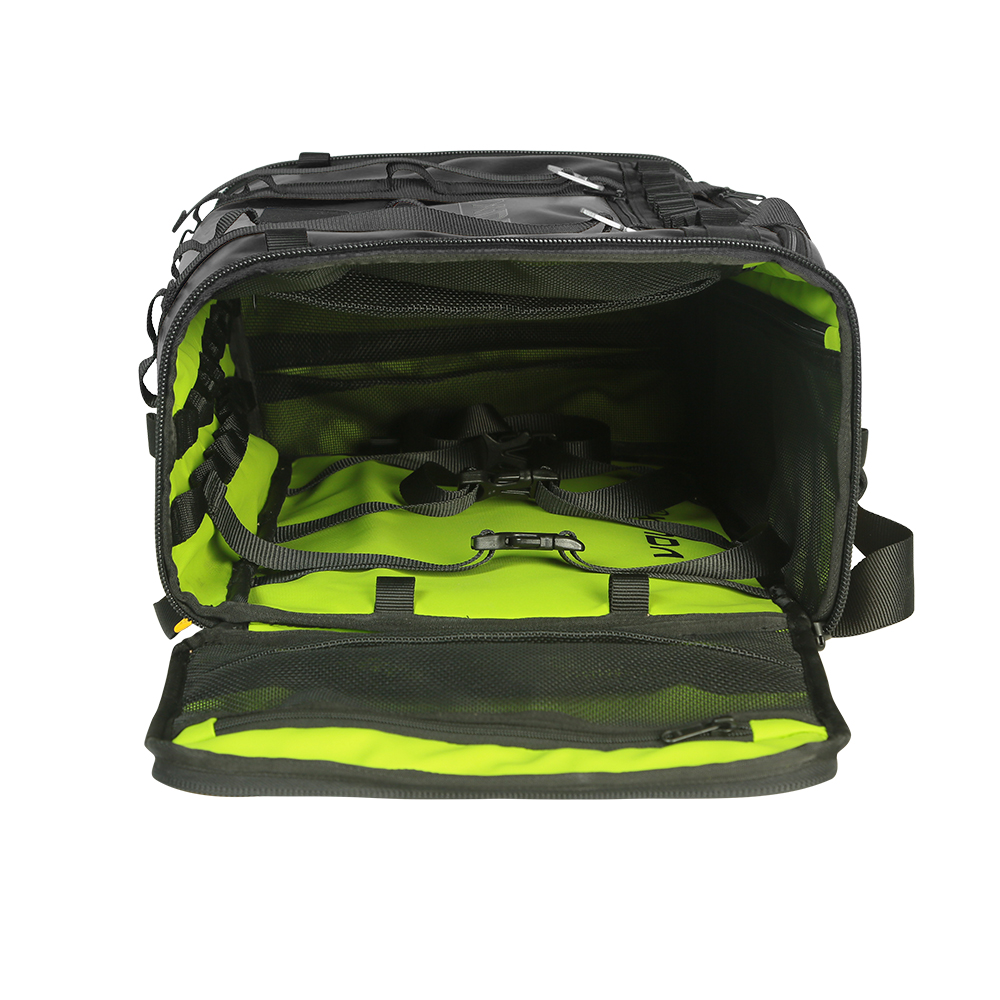
Real-World Packing Efficiency: Why 3-Way Opening Matters
With a traditional top-loading pack, retrieving gear from the bottom means removing 5–8 items on average. The B2 opens from top, bottom, and side, and can lay completely flat:
- Bottom opening → Pull ropes, sleeping bags, or spare clothing directly
- Side opening → Grab snacks, headlamps, or small tools without unpacking
- Top opening → Daily access to carabiners, belay devices, gloves
“Buried at the bottom” is no longer a problem. For team operations where multiple people share a pack, this design dramatically reduces rummage time.
Capacity Verified: 38L – 120m of Rope
Internal dimensions: 50×33×23cm. The main compartment holds approximately 120m of 10.5mm dynamic rope (properly coiled). Combined with internal loops and pockets, it also fits:
- Harness
- Helmet
- Carabiners & quickdraws
- Belay & rappel devices
- Slings & cordelettes
- Spare layers & gloves
Enough for:
- A full day of advanced climbing training
- On-site high-angle work kit
- Rapid-deployment rescue response
Carrying System: Built for Real Work
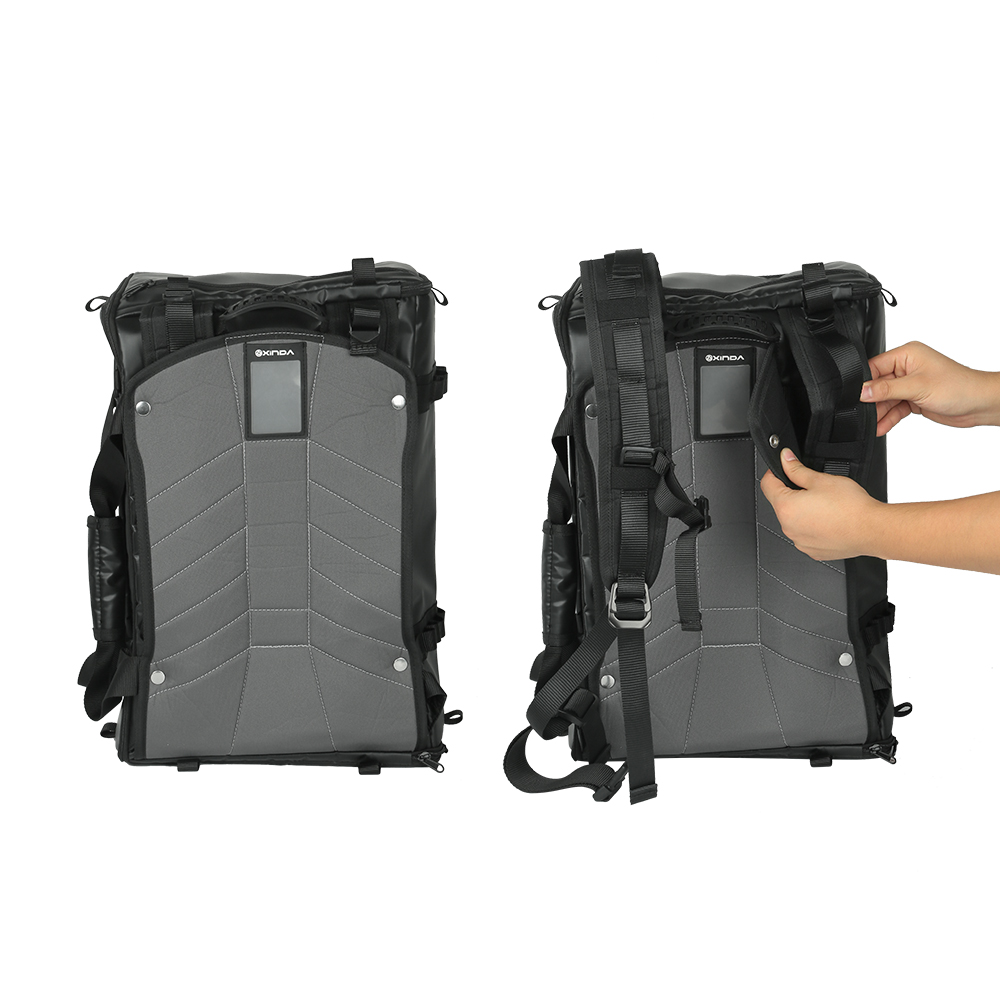
- Stowable shoulder straps → Hide away during transport or storage, no snagging
- Padded back panel → Protects your back from hard gear, adds impact cushioning
- Metal adjustment buckles → Corrosion-resistant, smooth operation, glove-friendly
- Reinforced haul handle → Comfortable even when fully loaded
- Quick-release buckles → Fast open/close, sturdy, won’t accidentally detach
Identification Management: Silent Efficiency for Teams
The VELCRO name patch area supports DIY ID patches, team logos, or function labels. For training organizations, rescue teams, or large clubs – five B2 packs lined up, instantly identifiable. Every second saved counts.
External Expansion: Helmet + Tool Carry
The Pro versions include an adjustable elastic helmet strap – secure climbing helmets or hard hats firmly to the outside. Multiple gear attachment points around the pack allow quick hooking of carabiners, drills, or two-way radios without eating into main compartment space.
Application Scenarios
- High-angle work gear management (power, telecom, construction)
- Rope rescue team deployment
- Climbing gyms / guiding services
- Outdoor instructors & guides
- Self-drive tours, cycling, camping
- Technical gear storage & transport
Conclusion
The B2 doesn’t just carry your gear – it organizes it. From material selection to multi-directional openings, from internal straps to external hang points – every detail answers the same question: What do professional users actually need?
 English
  简体中文
简体中文  Español
  Français
  Português do Brasil
  Português
  Русский
  العربية
  Deutsch
  Italiano